
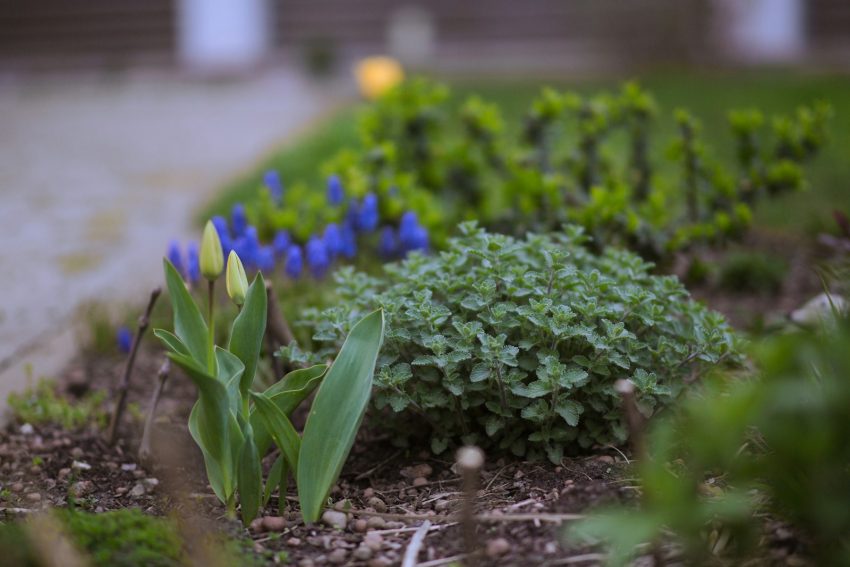
Most home vegetable gardens consist almost entirely of annuals — tomatoes, lettuce, beans, courgettes — that need replanting every spring and produce for a few months before dying. The annual approach is not the only option, and in cold climates, where the planting and growing season is short, an over-reliance on annuals reduces the proportion of the year when the garden actually feeds you. Edible perennials, by contrast, occupy a permanent position in the garden, emerge as soon as conditions allow each spring, and produce harvests for ten, twenty or even fifty years from a single planting. They are also typically less work than the equivalent annual crops, since the establishment effort is one-time.
This piece sets out the edible perennials that have proven reliable in cold-climate home gardens — northern Europe, the cooler parts of North America, mountain Europe — drawn from working gardens I have visited across France, Belgium, southern Germany and the British Isles. None of these plants is exotic; most have been cultivated in European gardens for centuries.
The case for perennials in cold climates
Cold-climate gardens have short growing seasons. In northern France, central Germany or the UK, the frost-free period is typically 150 to 220 days, and the warm productive period for heat-loving annuals is shorter still. The reliance on annual vegetable beds means that for roughly half the year, the garden is bare or full of dead plants, while for another quarter it is full of plants too immature to harvest. Perennials extend the productive window by emerging earlier and remaining productive later than most annuals.
The labour case is also strong. Annual vegetable gardens require seed sourcing, indoor seed-starting in late winter, hardening off, transplanting, weeding (since each year’s planting starts from bare soil), and continuous succession sowing. Perennial beds, once established, require mulching, occasional dividing, and harvesting. The labour difference is substantial; most experienced cold-climate gardeners I know spend less than a quarter of their gardening time on their perennial beds despite getting a third or more of their food from them.
The reliable cold-climate perennial vegetables
The following perennials produce reliably in zone 5 to zone 7 conditions (roughly equivalent to most of central and northern Europe) and have established harvest traditions in European gardens.
Asparagus
Asparagus is the most economically valuable perennial vegetable in cold climates. A well-prepared asparagus bed, planted with strong crowns from a reputable supplier, will produce for fifteen to twenty-five years. The first harvest comes in the second or third year, with full production by year four or five. A single mature crown produces approximately 100-200 grams of spears per spring, harvesting daily for six to eight weeks. A 2-metre bed of twenty crowns will deliver several kilograms of spears each spring.
The key cultural requirements are well-drained soil, full sun, and patience during establishment. Modern hybrid varieties (the F1 Jersey series, plus European varieties like ‘Gijnlim’ and ‘Connover’s Colossal’) outperform older varieties significantly. Asparagus does not transplant well once established, so site selection at planting matters substantially.
Rhubarb
Rhubarb is one of the toughest perennial crops in cold climates, tolerating temperatures well below -20°C and producing reliably from a single division for decades. The plant emerges in March or April depending on latitude, produces harvestable stalks from May through July, and dies back to the crown in winter. A mature plant occupies roughly one square metre and produces several kilograms of stalks annually.
The most reliable varieties for cold climates include ‘Victoria’, ‘Glaskins Perpetual’, and the red-stalked ‘Strawberry’. Forcing rhubarb under terracotta forcing pots in late winter produces tender pink stalks several weeks earlier than open-air rhubarb — a tradition particularly associated with the Yorkshire rhubarb triangle in the UK.
Sorrel
Sorrel (Rumex acetosa and the larger-leafed Rumex scutatus) is among the earliest spring greens, often emerging in February in mild winters. The leaves have a sharp lemon flavour from oxalic acid, used in soups (the classic French sorrel soup), salads, and sauces. The plant is exceptionally cold-tolerant, growing reliably across most of northern Europe, and produces from late winter through autumn.
One sorrel plant occupies approximately 30 cm and produces continuously through the growing season. The harvest is constant rather than concentrated; pick young leaves and the plant produces more.
Sea kale (Crambe maritima)
Sea kale is an underused perennial brassica native to European coastal regions. The plant produces blanched young shoots in early spring, harvested under forcing pots like rhubarb, with a flavour somewhere between cabbage and asparagus. A mature plant produces for fifteen to twenty years and tolerates poor soils well.
Sea kale was widely cultivated in Victorian-era English kitchen gardens but largely fell out of cultivation in the twentieth century. Its return is associated with the broader perennial vegetable interest of the past two decades, including the work of British grower Stephen Barstow and the Norway-based Plants For A Future research project.
Good King Henry (Chenopodium bonus-henricus)
Good King Henry is a hardy spinach relative grown in European gardens since at least the medieval period. The young shoots in spring can be eaten like asparagus; the leaves throughout summer can be used like spinach; the seeds in autumn can be cooked like quinoa (to which it is botanically related). The plant is exceptionally cold-hardy and tolerates partial shade well.
Production is modest per plant but spans a long season, and the plant is essentially zero-maintenance once established.
Perennial onions and alliums
Several perennial allium species provide year-round harvest. Welsh onions (Allium fistulosum) provide green stalks throughout the growing season. Walking onions (Allium proliferum) produce small bulblets at the top of stems that bend over and root, propagating the plant naturally. Garlic chives (Allium tuberosum) provide flat green leaves with a mild garlic flavour from spring through autumn. Wild garlic (Allium ursinum), native to European deciduous woodlands, naturalises in shaded garden corners and produces leaves in early spring before tree canopy fills out.
Sunchokes (Jerusalem artichokes)
Sunchokes (Helianthus tuberosus) are among the most productive perennial root crops in cold climates, with tubers harvested from late autumn through early spring. A single mature planting produces several kilograms of tubers annually with minimal maintenance. The plant is so vigorous that it can become weedy; site placement matters, since any tuber left in soil will resprout.
The flavour is often compared to artichoke, with a sweet nutty quality; the tubers are also notable for inulin content, which has prebiotic effects but can produce digestive discomfort in some people, particularly when first introduced to the diet.
Perennial fruit and shrubs
Beyond vegetable perennials, cold-climate gardens benefit from a small selection of perennial fruit. The most reliable in cold conditions:
- Blackcurrants: tolerate -25°C, produce from year three, manageable size for small gardens, exceptionally high vitamin C content.
- Redcurrants and gooseberries: similar cold tolerance, training as cordons saves space.
- Raspberries: summer- and autumn-fruiting varieties extend the harvest. Choose disease-resistant varieties like ‘Glen Ample’ or ‘Tulameen’ for summer, ‘Autumn Bliss’ for autumn.
- Hardy kiwi (Actinidia kolomikta, Actinidia arguta): less famous than commercial kiwi but tolerates -30°C, grown on substantial trellises.
- Saskatoon berries (Amelanchier alnifolia): native to North America, grown increasingly in northern Europe; cold-tolerant to -50°C.
- Cornelian cherries (Cornus mas): traditional Mediterranean and Central European fruit, increasingly grown in cooler climates.
Designing a perennial garden
Integrating perennials into a primarily annual vegetable garden takes some planning. Several practical considerations:
Perennials should generally be located at one edge of the garden, leaving the central beds free for annual rotation. Mixing perennials and annuals in the same bed creates problems: digging annuals damages perennial roots, and the perennials’ permanence prevents rotation that managing annual pests and diseases requires.
Most perennials benefit from generous initial soil preparation — deeper digging than for annuals, more compost incorporation, and possibly raised beds in heavy clay soils. The investment pays off across decades of harvest.
Mulching is the primary annual maintenance task. A thick organic mulch suppresses weeds, conserves moisture, and gradually feeds the soil. For most perennials, a 5-10 cm mulch layer applied each spring is sufficient.
What to plant first
For a gardener new to perennials, the lowest-risk first plantings are rhubarb, sorrel and Welsh onions. All three establish quickly, produce within a year, and tolerate a range of soil and microclimate conditions. The asparagus bed is the most economically rewarding but requires patience and good initial site preparation.
Sea kale, Good King Henry and hardy kiwi are worth adding once the basic perennial bed is established, as more interesting variations rather than core staples. The fruit shrubs are best added incrementally, since each one occupies considerable space.
Sourcing perennials
Most edible perennials are best bought as crowns or established plants rather than grown from seed. Reliable European suppliers include Pépinière de Brassempouy in France, Pflanzlust in Germany, The Real Seed Catalogue in the UK for unusual varieties, and Incredible Vegetables in Devon for the broader perennial vegetable range. Several specialist nurseries import from the long-established Norwegian and Polish perennial-vegetable traditions, where this style of gardening has been continuously practised.
The cost arithmetic of a perennial garden
The economic case for perennial vegetables becomes apparent over a multi-year window. A 4-square-metre asparagus bed costs roughly 80 to 120 euros to establish (twenty crowns at four to six euros each, plus soil preparation materials). The bed produces no harvest in year one, modest harvest in year two, and full production from year three onward, with annual production typically running 4 to 6 kilograms of spears for fifteen to twenty years. Total lifetime production at current organic asparagus retail prices of approximately 12 to 16 euros per kilogram is between 750 and 1,800 euros — a return on initial investment of roughly ten to fifteen times.
The arithmetic is even more favourable for rhubarb. A single mature rhubarb plant costs five to ten euros to establish, occupies one square metre, and produces several kilograms of stalks annually for twenty or more years. The economic return per square metre across the plant’s lifetime is among the highest of any garden crop. Sorrel, Welsh onions and walking onions all show similar economics, with the additional advantage that they require essentially zero ongoing input beyond mulching.
The aggregate effect across a small perennial vegetable bed is meaningful. A 20-square-metre perennial bed planted with rhubarb, asparagus, sea kale, perennial onions and a small selection of fruit shrubs typically produces 40 to 80 kilograms of food annually after establishment, at retail value of roughly 400 to 1,000 euros per year. The initial investment is recovered within three to five years, after which the bed is essentially self-supporting at low maintenance cost.
Regional variations: how perennial vegetable gardening differs across cold climates
The reliable perennial palette varies somewhat across Europe’s cold-climate regions. In the British Isles, the strong rhubarb, asparagus, sorrel and currants tradition has been continuous for centuries, supported by reliable rainfall and mild winters that allow extended harvest periods. The British perennial garden also typically incorporates more brassicas — perennial kale (specifically Daubenton’s kale), nine-star perennial broccoli, and Taunton Deane kale — than continental European traditions tend to include.
In northern France, Belgium and the Netherlands, the perennial vegetable tradition has historically focused on asparagus (with substantial regional production around Argenteuil and the Limburg region), sea kale (particularly along the coastal regions), Good King Henry, and lovage. The continental climate’s slightly more reliable summer heat allows some crops, including sweet potato as a tender perennial in the warmer microclimates, that British growers cannot reliably succeed with.
In Scandinavia and the Baltic states, the perennial vegetable palette emphasises maximum cold tolerance. Sea kale, Good King Henry, sorrel and the perennial alliums dominate. The Norwegian permaculture writer Stephen Barstow has documented an unusually wide range of perennial vegetable cultivation in southern Norway and has been influential in promoting many of the less-known species across northern Europe through his book Around the World in 80 Plants.
In central European mountain regions including Bavaria, Switzerland, Austria and northern Italy, alpine garden traditions include several perennial vegetables that do not feature prominently elsewhere. Alpine sorrel, mountain valerian, and several species of perennial wild onion grow well in elevated gardens and feature in regional cooking traditions including the Trentino and South Tyrolean kitchens.
Common misconceptions
Several common misconceptions about perennial vegetables persist in gardening literature. The first is that perennials require less work than they actually do during establishment. The first one to two years of an asparagus bed, in particular, demand careful weeding and watering attention; once established, the bed becomes low-maintenance, but the establishment phase is real work.
The second misconception is that perennial vegetables produce comparable volumes to annual equivalents. They do not, in most cases, on a per-square-metre per-year basis. Annual lettuce, kale or chard produces more harvestable mass per unit area than perennial sorrel or Good King Henry. The compensating advantages — earlier season start, longer harvest window, lower input requirements — make the perennials worthwhile, but the gardener should not expect them to replace annuals in raw productivity terms.
The third misconception is that all perennial vegetables taste like annual equivalents. Sea kale tastes meaningfully different from annual kale; Good King Henry has its own flavour profile distinct from spinach; perennial chard family members have somewhat different texture from annual chard. Some of these differences are improvements; some are simply differences. Treating perennial vegetables as substitutes rather than as their own category leads to disappointment.
The fourth is that all perennial vegetables are easy to source. They are not. Asparagus and rhubarb are widely available; sea kale, Good King Henry, walking onions and the rarer perennial brassicas may require ordering from specialist nurseries with limited stock. Planning the purchase one or two seasons ahead is often necessary.
Decision criteria: which perennials to plant first
For gardeners building a perennial bed from scratch, the criteria below help prioritise the order of plantings.
- Family preferences. Plant what your household will actually eat. An ambitious sea kale bed produces useless food if no one in the household enjoys it.
- Microclimate suitability. Match plants to your specific conditions. A frost pocket suits rhubarb and most alliums; a hot dry corner suits asparagus; a damp shady spot suits sorrel and wild garlic.
- Establishment time. Sorrel, walking onions and rhubarb produce within a year; asparagus and sea kale require two to three years before substantial harvest. Mix establishment timelines so the bed produces something in every year.
- Space requirement. Asparagus and rhubarb occupy permanent space; sorrel and Good King Henry need less. Match plant size to available area.
- Maintenance tolerance. Sunchokes can become weedy; mint spreads aggressively unless contained; horseradish is similarly invasive. Match plant aggression to your willingness to manage spread.
Further reading
The Wikipedia entry on perennial vegetables provides taxonomic context. The Royal Botanic Gardens, Kew publishes substantial material on edible plant biodiversity. The Royal Horticultural Society publishes practical cultivation guidance for most temperate perennial vegetables, and its annual trial reports include comparative performance data on cultivars across multiple growing conditions. Our archive on seasonal planting is at plantes & saisons, with broader landscaping material at aménagement paysager, and a separate thread on permaculture covering perennial-focused garden design.
This article is for informational purposes and reflects personal experience and publicly available horticultural information; specific plant suitability varies with local climate and soil, so consult regional nurseries for the most reliable advice.