
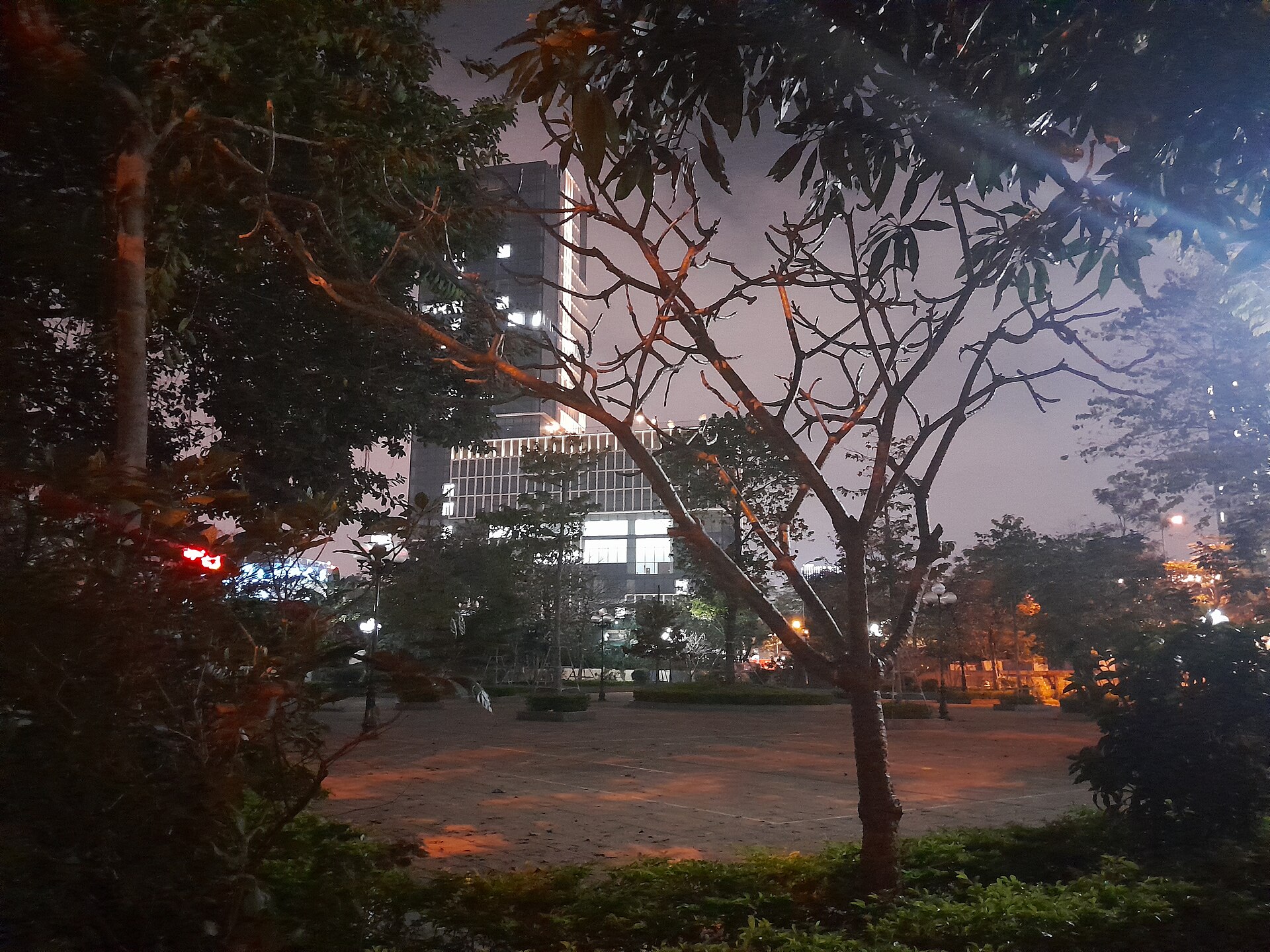
Dans la rue où j’habite, six pavillons sur onze laissent une applique allumée toute la nuit. Aucun de ces propriétaires n’en a besoin après minuit, aucun ne sait combien elle consomme, et aucun n’a jamais regardé ce qui tourne autour de l’ampoule au mois de juillet.
La question est régulièrement présentée comme un geste de bonne volonté, au même rang que trier ses papiers. Elle est en réalité encadrée par un texte précis, elle repose sur des mécanismes biologiques documentés, et elle se règle avec trois paramètres : l’heure, la teinte et l’orientation du faisceau.
Ce qui suit sépare ce qui relève de l’obligation réglementaire, qui ne vise pas les particuliers de la même manière que les professionnels, de ce qui relève du choix technique. Et ce qui, chez un particulier, produit un effet réel sur la faune de son propre jardin.
Ce qui se règle en une soirée, et ce qui ne se règle pas
- La teinte : au-delà de 3000 kelvins, une source attire nettement plus d’insectes qu’en dessous.
- L’orientation : tout flux envoyé au-dessus de l’horizontale est perdu et nuisible.
- L’heure : la période sensible pour la faune commence une heure après le coucher du soleil.
- La commande : un détecteur de mouvement supprime quatre-vingt-dix pour cent de la durée d’allumage.
- La puissance : dans un jardin, une source de faible flux suffit ; l’excès crée de l’éblouissement, pas de la visibilité.
- Le cadre légal : l’arrêté de 2018 encadre les installations professionnelles et publiques, pas l’applique de votre terrasse.
- Ce qui reste hors de portée : le halo urbain général, qui dépend des voiries et des enseignes, pas de vous.
Le dernier point mérite d’être posé d’emblée. Un particulier ne fait pas disparaître le halo lumineux de son agglomération. Il agit sur son propre jardin, sur les vingt à cinquante mètres alentour, et sur le corridor sombre que la faune utilise pour circuler. C’est une échelle modeste et c’est la seule qui lui appartienne.
La pollution lumineuse au jardin : ce que le terme recouvre
Le mot désigne quatre phénomènes distincts, et les confondre conduit à traiter le mauvais problème. Le halo est la clarté diffuse du ciel au-dessus d’une agglomération, produite par la diffusion du flux dans l’atmosphère. La lumière intrusive est celle qui entre chez le voisin par une fenêtre, sans lui avoir été destinée.
L’éblouissement est le contraste excessif entre une source vive et son environnement sombre : il réduit la vision au lieu de l’améliorer, ce qui explique qu’un projecteur puissant rende souvent un jardin moins praticable qu’une réglette basse. L’encombrement lumineux, enfin, est la multiplication de sources sans logique d’ensemble.
Les quatre relèvent du même chapitre du code de l’environnement, qui traite depuis une quinzaine d’années des nuisances lumineuses au titre de leurs effets sur la santé, sur la biodiversité et sur l’observation du ciel. Le ministère chargé de l’environnement publie les éléments de cadrage sur son site institutionnel.
Le cadre français ne vise pas directement l’applique du particulier
C’est le malentendu le plus fréquent, et il fonctionne dans les deux sens : certains croient qu’ils sont en infraction en laissant une lampe allumée, d’autres pensent qu’aucune règle n’existe.
L’arrêté de décembre 2018 qui organise la prévention des nuisances lumineuses s’applique aux installations d’éclairage extérieur destinées à l’éclairement d’espaces publics ou privés à usage professionnel, collectif ou commercial. Sont visés les voiries, les parcs de stationnement, les façades de bâtiments, les vitrines de commerce, les équipements sportifs, les chantiers, les parcs et jardins ouverts au public.
L’éclairage privatif d’une maison individuelle n’entre pas dans ce champ. Deux autres leviers existent malgré tout. Le maire dispose d’un pouvoir de police en matière de nuisances lumineuses, ce qui lui permet d’intervenir sur des situations caractérisées. Et la théorie du trouble anormal de voisinage s’applique à une source qui éclaire directement la chambre du voisin, indépendamment de toute réglementation technique.
Ce que l’arrêté impose aux installations concernées
| Paramètre | Exigence | Ce que cela vaut chez un particulier |
|---|---|---|
| Température de couleur | 3000 K au plus en règle générale, valeur abaissée en espace naturel protégé | repère directement transposable |
| Flux vers le haut | proportion émise au-dessus de l’horizontale limitée à une part très faible | choisir un luminaire à verre plat, fermé |
| Vitrines de commerce | extinction au plus tard à une heure du matin | sans objet, mais bon repère horaire |
| Façades de bâtiments | extinction au plus tard à une heure du matin | applicable à une façade éclairée par goût |
| Parcs de stationnement | extinction dans les deux heures suivant la fin de l’activité | logique de l’extinction après usage |
| Cours d’eau et plans d’eau | interdiction d’éclairage direct | vaut pour un bassin de jardin |
La dernière ligne est celle qu’on applique le moins et qui coûte le plus cher écologiquement. Un bassin éclairé par en dessous, esthétiquement spectaculaire, concentre les insectes aquatiques émergents et désorganise complètement le cycle nocturne d’un point d’eau. Si vous avez intégré un élément aquatique dans votre jardin, c’est le premier éclairage à supprimer.
La température de couleur, premier réglage utile
Une lumière blanche froide, autour de 4000 ou 5000 kelvins, contient une part importante de bleu. Une lumière chaude, à 2200 ou 2700 kelvins, en contient beaucoup moins. Cette différence de composition spectrale, invisible à l’usage, change tout pour les insectes.
Les insectes nocturnes sont majoritairement sensibles aux courtes longueurs d’onde, du bleu à l’ultraviolet proche. Une source riche en bleu attire donc bien davantage à flux équivalent. Le passage massif aux diodes blanches froides, dans les années où le critère unique était l’économie d’énergie, a produit un effet inverse de celui recherché : moins de consommation, plus d’attraction.
Le repère pratique est simple. Restez sous 3000 kelvins partout, descendez à 2200 ou 2400 dans les zones proches d’une haie, d’un bassin ou d’un jardin voisin non éclairé. Les luminaires ambrés existent en gamme courante et le rendu, souvent jugé jaune au premier soir, devient parfaitement confortable en une semaine.
L’orientation du flux règle l’autre moitié du problème
Une lampe qui envoie de la lumière vers le haut n’éclaire rien d’utile. Elle alimente le halo, elle éblouit, et elle expose une source ponctuelle vive à des kilomètres à la ronde pour les espèces volantes.
Trois familles de luminaires sont à écarter dans un jardin. La boule diffusante, qui émet dans toutes les directions et dont la moitié du flux part au ciel. La borne à chapeau ajouré, séduisante en catalogue et qui fuit par le haut. Et le projecteur orientable installé en hauteur puis dirigé vers le bas de façon approximative, dont le débordement latéral finit invariablement chez le voisin.
Ce qui fonctionne : un luminaire à verre plat horizontal, source encastrée et invisible depuis un point situé plus haut, installé bas et dirigé vers le sol. Le test est immédiat. Placez-vous à l’étage ou à une fenêtre haute et regardez votre jardin : si vous voyez l’ampoule elle-même, le luminaire est mal choisi ou mal posé.
Ce que la lumière fait aux insectes nocturnes
Le mécanisme le plus documenté est le piégeage. Un insecte nocturne qui s’oriente sur des repères lumineux lointains se retrouve captif de l’orbite d’une source proche, il tourne, se pose, repart, et il y consacre une nuit entière au lieu de se nourrir ou de se reproduire.
Trois conséquences s’enchaînent. L’épuisement, d’abord, pour ceux qui ne quittent pas la lampe avant l’aube. La prédation ensuite : une source lumineuse concentre les insectes et attire mécaniquement ce qui les mange, ce qui fait de l’applique un point de chasse artificiel. La désynchronisation, enfin, chez les espèces dont les rythmes d’activité, d’accouplement ou de ponte dépendent de la longueur de la nuit.
Les papillons de nuit sont les plus visibles, mais ils ne sont pas seuls. Les coléoptères nocturnes, les chironomes, plusieurs familles d’hyménoptères et de nombreux insectes aquatiques émergents réagissent de la même façon. Un jardin conçu pour accueillir les pollinisateurs perd une partie de son intérêt s’il est éclairé toute la nuit, parce que la pollinisation nocturne existe et compte davantage qu’on ne le suppose.
Chauves-souris, oiseaux, amphibiens : trois réponses différentes
Toutes les espèces ne réagissent pas dans le même sens, et c’est ce qui rend le sujet contre-intuitif. Chez les chauves-souris, certaines espèces opportunistes exploitent volontiers les concentrations d’insectes autour des lampadaires. D’autres, plus lucifuges, évitent totalement les zones éclairées et voient leurs corridors de déplacement coupés par un simple point lumineux mal placé.
L’effet net est donc une réorganisation du peuplement au profit de quelques espèces communes et au détriment des plus sensibles. C’est la raison pour laquelle la notion de trame noire, c’est-à-dire de continuité d’espaces non éclairés, s’est imposée dans les documents de planification à côté des trames verte et bleue. L’établissement public chargé de la biodiversité en publie les principes sur son site.
Chez les oiseaux, les effets relevés portent sur l’avancement de l’heure du chant, sur les migrateurs nocturnes désorientés par les sources vives, et sur la durée d’activité prolongée en période de reproduction. Chez les amphibiens, une mare éclairée perturbe la migration vers le site de ponte et l’activité des adultes. Un jardin qui se veut un refuge pour la faune locale commence par lui laisser des heures d’obscurité.
Les plantes voisines d’un éclairage vivent un autre automne
Le point est rarement abordé et il se constate à l’oeil nu chaque mois de novembre. Un arbre planté à proximité immédiate d’un lampadaire garde ses feuilles nettement plus longtemps que le même arbre situé vingt mètres plus loin, et le décalage se lit branche par branche selon la distance à la source.
L’explication tient à la façon dont les végétaux mesurent la longueur de la nuit. Les pigments qui assurent cette lecture sont sensibles à des intensités très faibles, et une nuit interrompue par un éclairage constant brouille le signal qui déclenche l’entrée en dormance.
Les conséquences pratiques sont concrètes : entrée en repos retardée, aoûtement incomplet des jeunes pousses, sensibilité accrue aux premières gelées. Si vous éclairez une haie ou un arbuste toute la nuit, ne cherchez pas ailleurs la cause de dégâts de gel qui n’apparaissent que d’un côté de la plante.
Les horaires d’extinction qui ont un sens chez soi
Le repère de l’arrêté, une heure du matin pour les façades et les vitrines, est un plancher administratif, pas un objectif écologique. Pour un jardin, la fenêtre à protéger commence beaucoup plus tôt.
- Du coucher du soleil à une heure après : période d’émergence de nombreux insectes et de sortie des chauves-souris.
- De là jusqu’à deux heures du matin : pic d’activité de la majorité de la faune nocturne.
- Après deux heures : activité réduite mais déplacements encore nombreux.
- La dernière heure avant l’aube : période de retour vers les gîtes, sensible pour les espèces lucifuges.
La règle utile n’est donc pas une heure d’extinction mais un principe d’allumage : on éclaire quand on est là, pas quand on suppose qu’on pourrait y être. Un détecteur réglé sur deux minutes ramène la durée annuelle d’allumage d’environ trois mille heures à quelques dizaines. C’est le seul dispositif qui règle simultanément la question écologique, la question de la consommation et celle du voisinage.
Quand un éclairage devient un problème entre voisins
Une lumière qui traverse une fenêtre de chambre relève du trouble anormal de voisinage, notion qui ne suppose aucune faute ni aucune infraction : il suffit que la gêne dépasse les inconvénients ordinaires du voisinage.
Trois situations reviennent. Le projecteur à détection réglé trop large, qui se déclenche sur un chat et illumine la façade d’en face vingt fois par nuit. La guirlande d’extérieur laissée allumée en permanence, dont la gêne vient de la durée plus que de l’intensité. Et l’éclairage de piscine ou de bassin, orienté vers le haut par construction.
La sortie est presque toujours technique et peu coûteuse : réduire l’angle de détection, poser un déflecteur latéral, baisser le luminaire de cinquante centimètres, passer en teinte chaude. Un échange direct et une démonstration sur place règlent l’immense majorité des cas avant toute démarche formelle.
Sept réglages à faire dès ce soir
- Sortez à minuit et recensez ce qui reste allumé, chez vous et sur les cinquante mètres alentour.
- Coupez tout ce qui n’éclaire pas un cheminement réellement utilisé la nuit.
- Remplacez les sources supérieures à 3000 kelvins par des sources chaudes, en commençant par les plus proches des haies.
- Inclinez ou remplacez tout luminaire dont on voit la source depuis une fenêtre à l’étage.
- Installez un détecteur là où l’éclairage sert à la sécurité, avec une temporisation de deux minutes.
- Supprimez tout éclairage immergé ou dirigé vers un point d’eau, sans exception.
- Laissez au moins une zone du jardin totalement noire, de préférence celle qui longe une haie ou un mur végétalisé.
Le septième point est le plus important et le moins appliqué. Une bande sombre continue, même étroite, offre un corridor de déplacement à des espèces qui refusent de traverser une zone éclairée. Dans un jardin de ville, cette bande vaut souvent davantage que tout le reste des aménagements en faveur de la biodiversité urbaine.
Questions fréquentes
Une lumière chaude attire-t-elle vraiment moins d’insectes ?
Oui, à flux égal, et l’écart est net. Les insectes nocturnes réagissent principalement aux courtes longueurs d’onde, très présentes dans le blanc froid et fortement réduites dans l’ambré. Le remplacement d’une source à 4000 kelvins par une source à 2200 kelvins est la modification la plus rentable qu’on puisse faire, parce qu’elle ne demande ni travaux ni changement d’habitude.
Les lampes solaires de jardin posent-elles le même problème ?
Elles en posent un de plus : comme elles ne coûtent rien à l’usage, on en installe beaucoup et on les laisse allumées jusqu’à épuisement de la batterie, c’est-à-dire souvent toute la nuit d’été. Elles sont généralement en blanc froid, orientées vers le haut, et diffusantes. Le solaire n’est pas une réponse à la pollution lumineuse, c’est seulement une réponse au câblage.
Faut-il éteindre en hiver, quand les insectes ne volent pas ?
La pression sur les insectes baisse effectivement, mais les autres effets subsistent : lumière intrusive chez le voisin, désorientation des oiseaux, perturbation du repos végétatif des plantes proches. Et les premières émergences interviennent bien avant le printemps calendaire lors des redoux. Une commande par détection règle la question sans avoir à raisonner par saison.
Mon éclairage extérieur est-il obligatoire pour l’assurance ?
Aucune obligation générale de ce type n’existe pour une maison individuelle. Ce qui compte pour la sécurité, c’est la visibilité au moment où quelqu’un s’approche, pas une clarté permanente. Un éclairage à détection est d’ailleurs considéré comme plus dissuasif, parce qu’il signale une présence au lieu d’installer un décor constant.
Puis-je conserver un éclairage décoratif sur un arbre ?
Ponctuellement, oui, en teinte chaude, avec une durée limitée à quelques heures en début de soirée et une extinction complète ensuite. Ce qui est à éviter, c’est l’éclairage permanent d’un houppier depuis le sol : le flux traverse le feuillage, part au ciel, retarde la dormance de l’arbre et concentre les insectes dans un volume dont ils ne sortent plus.
Éteindre n’est pas un renoncement au confort. C’est passer d’un éclairage installé une fois pour toutes à un éclairage qui répond à un usage, et le résultat se voit dès la première saison : plus d’insectes dans les massifs, des chauves-souris qui repassent au-dessus du jardin, et une facture qui baisse sans qu’on ait rien mesuré.