
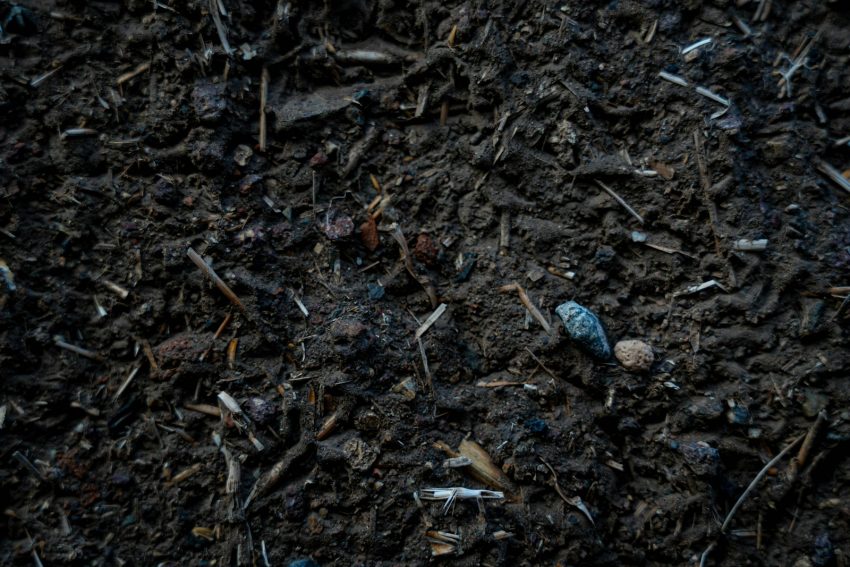
Roughly one teaspoon of healthy garden soil contains more living organisms than there are humans on Earth. The figure, repeated often enough that it has become almost cliché, is approximately accurate: a gram of fertile soil contains between 10^8 and 10^10 bacterial cells, several million fungal hyphae fragments, hundreds of thousands of protozoa, and tens of thousands of larger invertebrates per kilogram. What is not accurate is the popular gardening shorthand that this complexity can be managed by buying microbial inoculant products at the garden centre. The honest research evidence is messier and more interesting.
This piece walks through what soil microbiome research has actually established about home garden practice, separating the well-supported interventions from the marketing-driven ones. The aim is to be specific about what gardeners can usefully do and where the evidence does not support the more elaborate claims.
What the soil microbiome actually does
The soil microbiome performs functions that plant roots cannot perform alone. The most consequential are nutrient cycling (converting organic nitrogen, phosphorus and other elements into forms plants can absorb), nutrient transport (moving nutrients toward roots through fungal networks), disease suppression (by competing with and antagonising soil pathogens), and soil structure formation (binding mineral particles into aggregates that hold water and air).
The most-studied soil organisms in agricultural research are mycorrhizal fungi, which form symbiotic relationships with the roots of approximately 80 to 90 percent of land plant species. Mycorrhizal hyphae extend the effective root surface area by orders of magnitude, dramatically improving water and phosphorus uptake. The 2003 paper by Smith and Read in Mycorrhizal Symbiosis remains the standard scientific reference; recent research has extended understanding into specific molecular signalling pathways but has not overturned the basic functional picture.
The remaining bulk of the microbiome is bacterial. Specific bacterial groups (rhizobia in legumes, free-living nitrogen-fixers, ammonia-oxidisers, plant growth-promoting rhizobacteria) play documented roles. Most other bacteria are best understood as part of an ecological community whose net effect on plant health is positive but not easily attributable to specific organisms.
What home gardeners should actually do
The interventions with the strongest research support are surprisingly simple and well-known. The marketing-driven interventions are often weaker than the basics. The honest priority order:
1. Add organic matter, repeatedly
The single highest-impact intervention is consistent addition of organic matter — compost, well-rotted manure, leaf mould, mulch — over multiple years. The mechanism is well established: organic matter feeds the entire soil food web, improves soil structure, retains moisture, and slowly releases nutrients. A 2018 meta-analysis published in Nature by Rusch and colleagues, covering 412 studies of agricultural soil management, found organic matter addition was the single strongest predictor of soil microbial diversity and crop performance, exceeding any specific microbial inoculant in effect size.
For home gardens, the practical implication is clear: top-dress beds with 2-5 cm of good compost annually, ideally in autumn or early spring. The effect compounds across years. A garden that has received consistent compost additions for ten years has substantially better soil biology than one that received a single high-quality inoculant treatment.
2. Maintain plant cover year-round
Bare soil is hostile to most soil biology. Plant cover — through cover crops in winter, mulch in summer, perennial plantings, or just consistent vegetable rotation — keeps the rhizosphere active and feeds the microbiome through root exudates. Several decades of agricultural research have established that cover-cropped soils maintain microbial biomass and diversity levels far above bare-fallow soils.
For home gardeners, this means avoiding the traditional « clear the bed and leave the soil bare over winter » approach. Sow a winter cover crop (rye, vetch, phacelia, depending on climate) or maintain a thick mulch layer to keep the soil biology active.
3. Minimise tillage
Mechanical disturbance of soil destroys fungal networks and exposes microbial communities to oxygen, dehydration and UV light. The shift from intensive tillage to no-till and reduced-till methods is one of the most important changes in agronomic practice over the past half-century, with substantial research backing for soil biology benefits. The 2014 paper by Six and colleagues in Soil Biology and Biochemistry reviewed the no-till evidence and found consistent positive effects on fungal abundance, soil structure and aggregate stability.
For home gardeners, this means moving away from annual rotavating or aggressive double-digging, in favour of shallow surface cultivation, broadforking only when needed, and « no-dig » methods popularised by Charles Dowding and others.
4. Avoid broad-spectrum biocides
Synthetic fungicides and many synthetic insecticides have non-target effects on soil biology. The evidence on this is well-established for several classes: copper-based fungicides, in particular, accumulate in soil and produce documented suppression of fungal communities. Several insecticides including neonicotinoids have been shown to disrupt soil microbial function at field-realistic concentrations.
For home gardens, the practical implication is to avoid these products where alternatives exist, and to accept some pest and disease pressure as a normal feature of a biologically active garden.
What home gardeners probably should not bother with
Several popular interventions have less research support than their marketing suggests.
Microbial inoculants and probiotics
Commercial microbial inoculant products — bottles of mycorrhizal spores, bacterial cultures, « compost teas » — are an industry with sales in the hundreds of millions of dollars. The research evidence for their effectiveness in established garden soils is mixed. A 2019 meta-analysis by Salomon and colleagues, published in Mycorrhiza, found that mycorrhizal inoculation produced measurable benefits in approximately 30 percent of studied cases, no detectable effect in roughly 50 percent, and slightly negative effects in the remaining 20 percent. The benefit was strongly correlated with starting soil condition: heavily disturbed or sterilised soils benefited most; established garden soils benefited least.
The reason is that healthy garden soils already contain the relevant organisms. Adding more spores to a soil that already has functional mycorrhizal communities produces no measurable benefit; the existing fungi outcompete the introduced ones. Inoculants are most useful in genuinely depleted soils — heavily compacted urban soils, soils that have been subjected to prolonged heavy chemical use, soils on construction sites — where existing communities have been damaged.
Compost teas
The compost tea literature is particularly contentious. While theoretically attractive — brewing compost in aerated water to multiply microbial populations, then applying the result — the evidence for benefit over simple compost application is weak. The 2014 review by Scheuerell and Mahaffee in Compost Science and Utilization concluded that compost teas could provide marginal benefits in some contexts but were not consistently superior to direct compost application. The American Phytopathological Society has issued cautions about the disease-suppression claims commonly made for compost tea products.
Biochar
Biochar — partially carbonised plant material added to soil — has been the subject of substantial research interest in the past decade. The evidence is genuinely mixed: biochar can produce measurable benefits in tropical, weathered, low-pH soils (where most of the original Amazonian terra preta research originated), but the benefits in temperate European garden soils are smaller and less consistent. For home gardens in northern Europe, biochar is unlikely to produce dramatic effects, though it does no harm.

The compost question
Since compost is the highest-leverage intervention, several questions about how to compost well are worth addressing. The most important variables are carbon-to-nitrogen ratio (roughly 25-30:1 for active composting), moisture (around 50-60 percent water content, the consistency of a wrung-out sponge), and aeration (turning periodically or constructing the pile to allow passive air movement).
For home gardens, the simplest approach is the cool composting method: build a pile, add material as it becomes available, water occasionally if very dry, turn once or twice a year, and use the resulting compost approximately twelve to eighteen months later. The biology is forgiving; cool composting produces somewhat less microbially active compost than hot composting but is significantly less labour-intensive and works well at home garden scale.
Whether to add compost activator products is generally not necessary. A pile that contains a reasonable mix of green and brown material will develop active decomposition without inoculant.
Soil testing: when it is worth it
Standard soil tests measure pH, nutrient levels (N, P, K, sometimes S, Ca, Mg, B, Mn) and organic matter content. They do not measure microbial activity or diversity directly. For most home gardens, a basic soil test every three to five years is useful for catching pH drift or major nutrient deficiencies. More frequent testing is rarely needed.
Specialised microbial assays — soil respiration tests, mycorrhizal counts, microbial biomass assays — exist but are expensive and not usually worth the cost for home gardens. The standard organic-matter top-dressing approach delivers benefits regardless of which specific microbial groups are limiting.
Common myths and what the evidence actually says
A few common claims are worth addressing directly:
- « Tilling kills earthworms. » Partially true; aggressive deep tilling reduces earthworm populations significantly, but light surface cultivation has minor effects.
- « Coffee grounds make soil acidic. » Largely false in practical use; the pH effect of garden-quantity coffee additions is small and short-lived.
- « You can over-compost. » True at extremes; piling 30 cm of compost on a bed annually can produce nutrient excess and salt accumulation. The 2-5 cm annual rate is well below the threshold for harm.
- « Mycorrhizae help all plants. » Mostly true, but with exceptions: brassicas, beets, spinach and a few other plant families do not form mycorrhizal associations.
What healthy soil looks and smells like
The simplest diagnostic for soil health is sensory. Healthy garden soil has dark colour from organic matter, crumbly structure that holds together when squeezed but breaks apart easily, a sweet earthy smell (the smell is partly produced by actinobacteria, particularly geosmin), visible biological activity (worms, fungal hyphae, decomposing organic material), and water-holding capacity that is high without becoming waterlogged. A soil with all these features almost certainly has a functional microbiome regardless of what specific organisms are present.
The carbon-storage angle
One of the most consequential implications of soil microbiome management has emerged from climate research over the past decade. Soil organic matter is one of the largest terrestrial carbon stores, and gardening practices that increase soil organic matter measurably contribute to atmospheric carbon drawdown. The numbers per garden are small, but cumulative across millions of households they are non-trivial.
The 2017 paper by Minasny and colleagues in Geoderma proposed the « 4 per 1000 » initiative — increasing global soil carbon stocks by 0.4 percent per year — as a meaningful contribution to climate mitigation. The initiative was endorsed at the COP21 Paris Agreement and continues to be promoted by the French Ministry of Agriculture, which originated the proposal. Home gardens that consistently add organic matter and minimise tillage typically increase soil organic carbon at rates well above the 0.4 percent target, partly because the starting baseline in many garden soils is low.
For gardeners interested in this dimension, the practical implication reinforces the priority order above. Consistent compost addition, year-round plant cover and minimal tillage are the same practices that build microbiome health and that build soil carbon. The two goals align almost completely.
Comparative analysis: organic vs conventional garden management
The research literature on organic versus conventional management produces consistent results regarding soil microbiome health. Organic systems, broadly defined to exclude synthetic fertilisers and biocides, typically support 30 to 60 percent higher microbial biomass and 20 to 40 percent higher microbial diversity than conventional systems on the same soil type. The 2002 study by Mäder and colleagues in Science tracked Swiss organic and conventional farms over 21 years and found consistent microbiome advantages for organic management.
For home gardeners, the implications are clearer than for commercial agriculture. The trade-off in commercial agriculture between yield and soil biology is real and complicated. In home gardens, where absolute yield is rarely the binding constraint and where small-scale management is feasible, the microbiome benefits of organic-style management can be captured without significant production cost. Most home gardeners who shift to consistent compost addition, cover cropping and minimal tillage report stable or improving yields after a transition period of two to four seasons.
Misconceptions that persist
Several misconceptions about soil microbiome management persist in gardening literature and deserve correction. The first is that synthetic fertilisers necessarily destroy the soil microbiome. The evidence is more nuanced. Moderate synthetic nitrogen application primarily affects nitrogen-cycling bacterial communities, with effects on overall microbial biomass that are smaller than the marketing of organic alternatives sometimes suggests. The serious damage to soil biology from synthetic agriculture comes mostly from biocides (fungicides, fumigants, neonicotinoids) and tillage practices, not from fertilisers per se.
The second misconception is that all fungi are beneficial. Soil pathogenic fungi — including Pythium, Phytophthora, Fusarium and several others — cause significant disease in vegetable gardens. Healthy soil microbiomes typically suppress these pathogens through competition and antagonism, but soil that has accumulated specific pathogen populations from poor rotation can require active management.
The third is that earthworms are universally good. They are mostly good, but European deep-burrowing earthworms (Lumbricus terrestris and others) introduced to North American forests have caused documented ecological damage by accelerating leaf litter decomposition in forests evolved for slow decomposition. For European garden soils, where earthworms are native, their presence is straightforwardly positive.
The fourth misconception is that pasteurising or sterilising garden compost improves it. The opposite is true. Live microbial communities in compost are part of what makes the material valuable. Pasteurised compost (heated to kill pathogens) loses much of its microbiological benefit. The relevant safety concern — pathogen transfer from manure-based composts — is best managed through proper hot composting rather than through subsequent sterilisation.
A diagnostic framework for problem soils
For gardeners trying to diagnose soil problems, a structured framework helps. The criteria below cover most of the common diagnostic challenges.
- Step one: visual and tactile assessment. Dig a small hole 30 cm deep. Examine the colour, structure and biological activity. A soil with no visible earthworms and a pale or grey colour suggests low organic matter or compaction.
- Step two: simple drainage test. Fill the hole with water and time how long it takes to drain. Less than 10 minutes suggests excessive drainage and likely sandy texture; more than two hours suggests compaction or heavy clay.
- Step three: standard soil test. A laboratory test for pH, organic matter and basic nutrients costs roughly 25 to 50 euros and provides a baseline. Any major deficiency or pH issue should be addressed before more advanced microbiome interventions.
- Step four: plant indicator assessment. Note which plants thrive and which struggle. Persistent failure of brassicas (cabbage family) often suggests clubroot or other soil pathogen build-up. Persistent failure of fruiting crops can suggest phosphorus or potassium limitation.
- Step five: management correction. For most problems identified through this framework, the response is the same: consistent organic matter addition over multiple seasons, plus targeted correction of any specific deficiency identified by testing.
Further reading
The Wikipedia entry on soil biology provides a technical overview. The UN Food and Agriculture Organization publishes substantial soil-microbiome resources for both agricultural and garden contexts. The United States Department of Agriculture Natural Resources Conservation Service publishes free educational material on soil health assessment that translates well to home garden contexts. Our archive on garden ecology is at écologie verte, with broader gardening material at gardening tips, and a separate thread on composting covering home composting methods and troubleshooting.
This article is for informational purposes and reflects publicly available agricultural and ecological research; specific soil conditions vary widely, so observations from research literature should be adapted to your local soil type and gardening goals.